
How to Import and Sell Farm Inputs in Ghana Legally
From EPA import permits for pesticides to PPRSD seed import clearances and customs duties on fertilisers: the complete legal pathway for farm inputs businesses.
Ghana's agricultural inputs market is substantial, and it is significantly underserved in terms of quality-assured, properly registered products available to smallholder and commercial farmers. For a business that can navigate the regulatory requirements and build a reliable supply chain, the opportunity is real. But selling farm inputs in Ghana without the appropriate legal clearances is not a risk worth taking. Enforcement by the PPRSD, EPA, and Ghana Customs is active, and the penalties for non-compliance range from product confiscation to prosecution.
Start with Business Registration
Before you can obtain any import or product licence, you need a registered business entity. For foreign-owned inputs businesses, this means ORC company registration followed by GIPC registration. For Ghanaian-owned businesses, ORC registration is required. Tax registration with the Ghana Revenue Authority is also necessary. This foundational step is non-negotiable, and agencies will ask for your Certificate of Incorporation as part of virtually every subsequent application.
Product Registration: The Core Requirement
Every agricultural input product sold in Ghana must be registered with the appropriate authority before it can legally enter the market. The authority varies by product type.
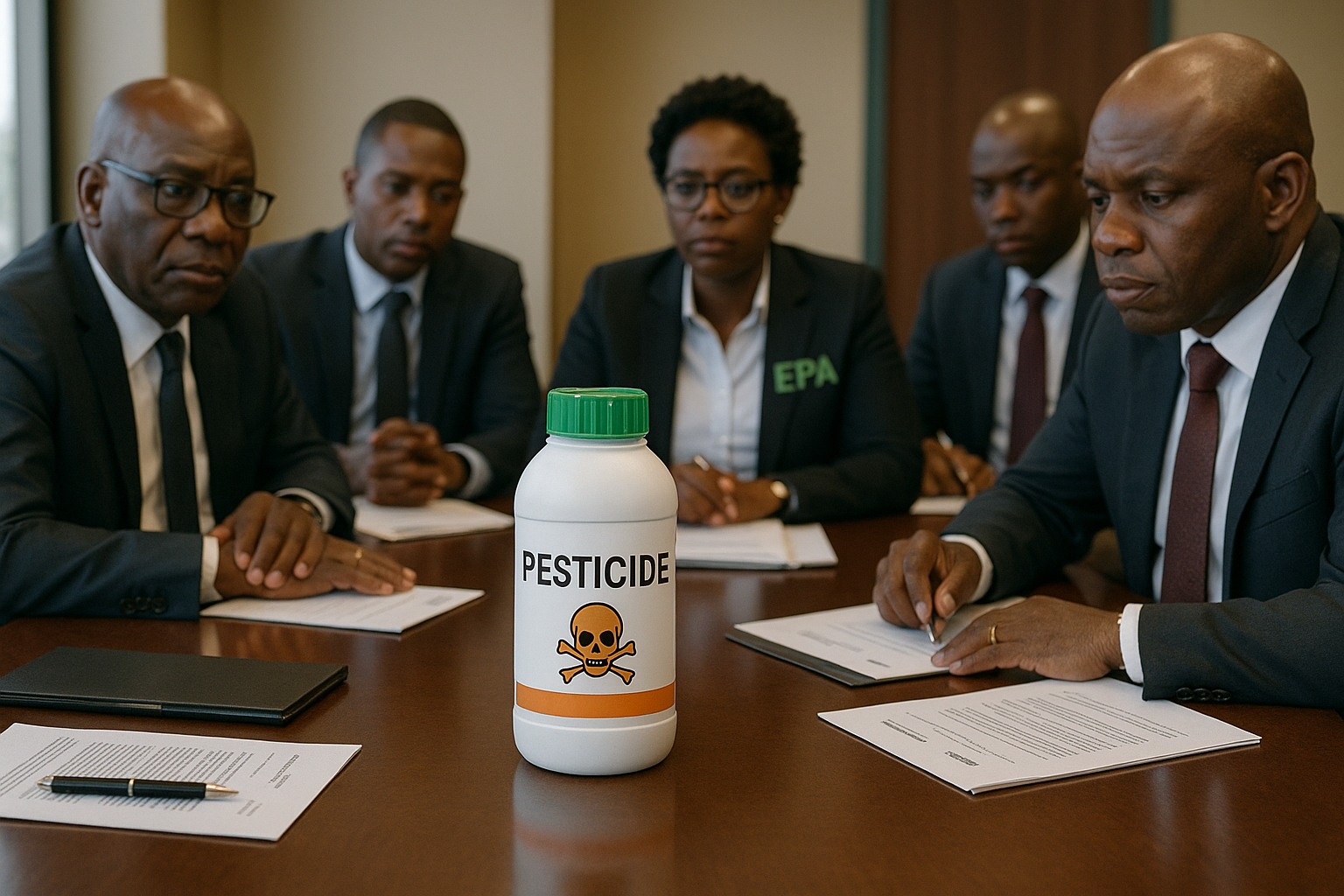
- Pesticides and agrochemicals: registered with the Environmental Protection Agency under the Pesticides Control and Management Act 1996 (Act 528). No pesticide may be imported or sold without a valid EPA registration certificate.
- Fertilisers: registered with the PPRSD under the Ministry of Food and Agriculture. The registration confirms composition accuracy, labelling compliance, and product suitability.
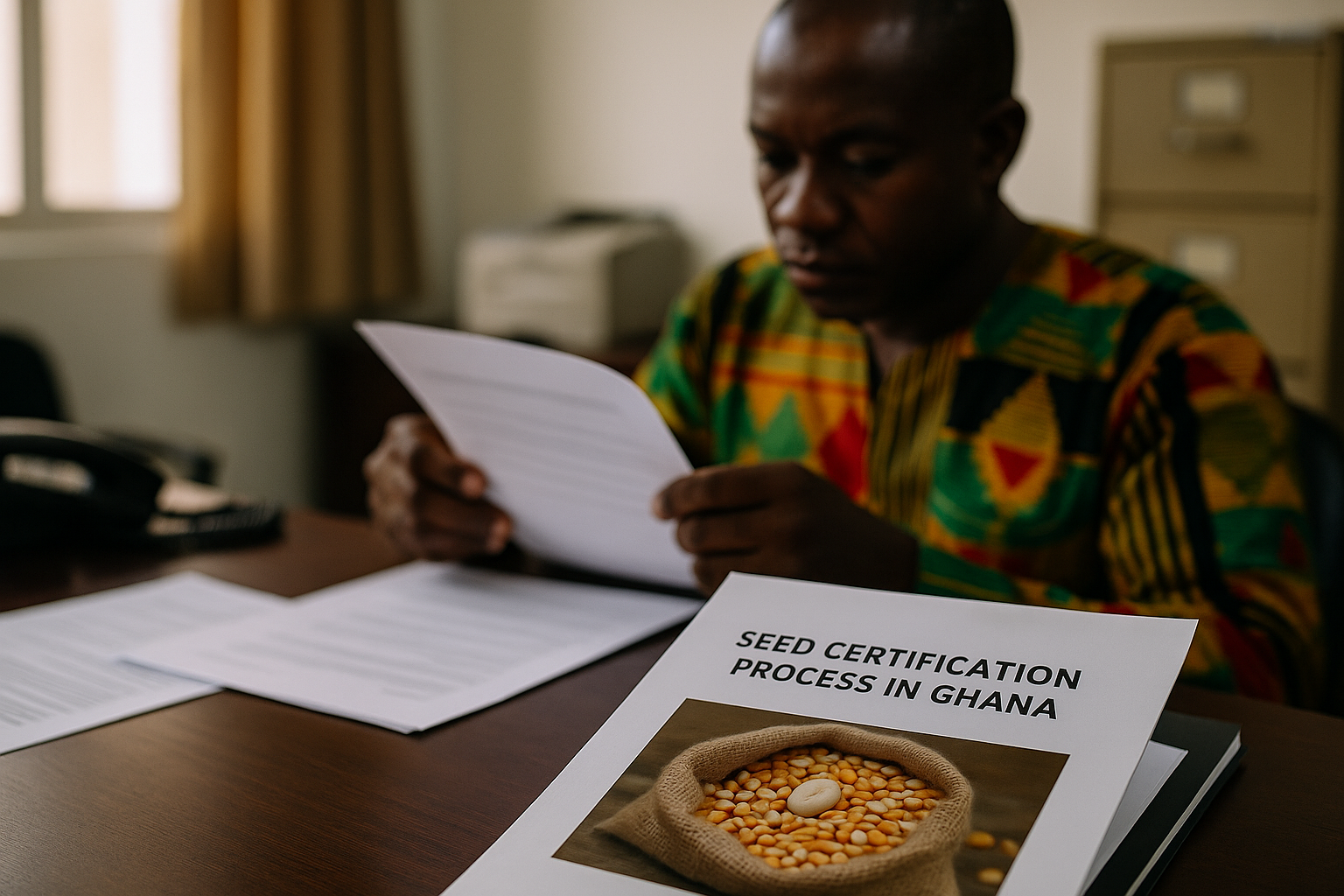
- Seeds and planting materials: seeds of regulated crop species must either be certified by the PPRSD (for locally produced seed) or have an import permit and relevant phytosanitary clearance (for imported seed). Variety registration for new varieties is required.
- Farm equipment and machinery: generally does not require specific product registration, but import duties and VAT apply unless the importer qualifies for exemptions under investment incentive schemes.
Import Permits and Customs Procedures
Importing agricultural inputs into Ghana involves several concurrent processes. Ghana Customs manages the tariff and duty side of importation. Agricultural inputs classified as exempt from import duty or subject to reduced rates include fertilisers (which attract zero or low duties under agricultural support policies), seeds, and some categories of farm equipment. The exemption status of specific products should be verified against the current Ghana Customs tariff schedule before each importation, as classifications and duty rates are subject to change.
Beyond customs, specific import permits are required for regulated inputs. Pesticide importation requires an EPA import permit issued against the product's registration. Seed importation requires a PPRSD import permit and phytosanitary certificates from the country of origin confirming the seed is free from quarantine pests and diseases. Fertiliser importation does not typically require a separate import permit beyond customs documentation, but the product must be registered with PPRSD before it can be sold.
Distribution and Retail: Licence Requirements
Beyond product registration and importation, the distribution and retail of certain inputs requires additional licences. Pesticide distributors and retailers must be licensed by the EPA. The licence application requires evidence of appropriate storage facilities, trained and certified staff, and compliance with handling and safety requirements. Unlicensed pesticide retailing is a common target of EPA enforcement operations.
Compliance is a competitive advantage
In Ghana's inputs market, regulatory compliance is not just a legal obligation. It is increasingly a commercial differentiator. Institutional buyers, large farms, NGO-supported programmes, and government-backed outgrower schemes are all moving toward insisting on properly registered inputs from licensed distributors. Building a compliant supply chain from the start positions your business to capture these higher-value channels. PEA Agro Consult advises inputs businesses on the full regulatory pathway from product registration to distribution licensing.
Ready to put this into practice?
PEA Agro Consult's team of experts is ready to guide your agribusiness — from certification and greenhouse setup to market entry and commodity aggregation. Let's build something remarkable together.