EPA Approval Process for Pesticides in Ghana
The Pesticides Control and Management Act, the data requirements for registration, the provisional registration route for field trials, and ongoing compliance obligations.
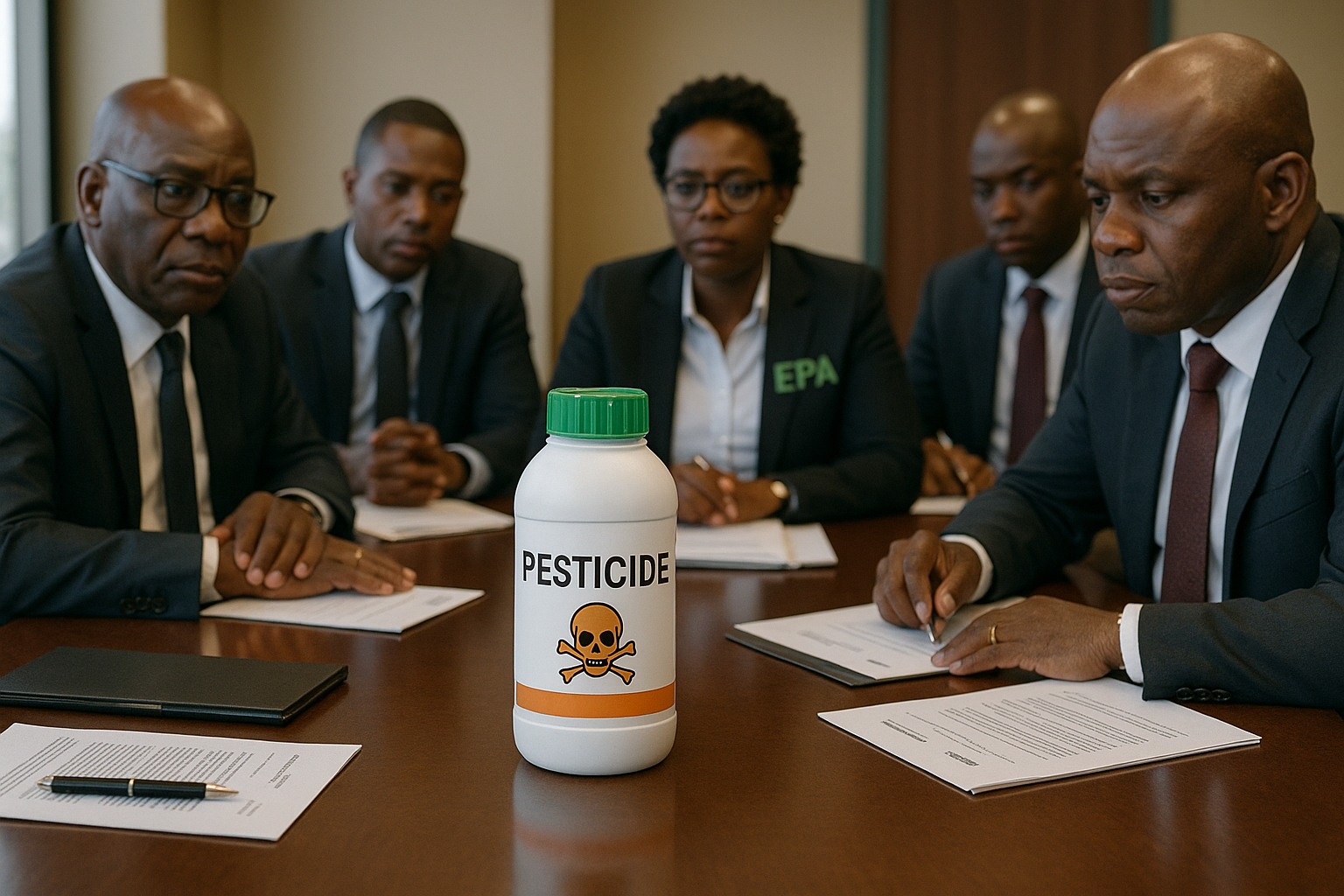
Pesticide regulation in Ghana is among the more complex areas of agricultural regulatory compliance, because it sits at the intersection of public health protection, food safety, environmental stewardship, and trade policy. The Environmental Protection Agency (EPA) is the lead authority for pesticide approval, but the process involves multiple agencies and the standards are stringent by design.
Whether you are a manufacturer, importer, or distributor of pesticide products in Ghana, understanding this regulatory landscape is not optional. Selling an unregistered pesticide in Ghana is a criminal offence under the Pesticides Control and Management Act 1996 (Act 528), and enforcement activity has increased significantly in recent years.
The Governing Legislation
The primary legal instrument is the Pesticides Control and Management Act 1996 (Act 528). The Act prohibits the manufacture, formulation, importation, exportation, sale, or use of any pesticide in Ghana unless that pesticide is registered with the EPA. A Pesticides Control Board advises the EPA on technical matters related to pesticide registration and use. The Act also sets the framework for pesticide storage, handling, and disposal requirements.
The Registration Process: An Overview
Pesticide registration in Ghana follows a data-intensive review process modelled on internationally recognised standards, including those of the Food and Agriculture Organization (FAO) and the World Health Organisation (WHO). The process evaluates each product's efficacy against its target pests, its toxicological safety for users and bystanders, its environmental fate and potential impact, and its residue behaviour in treated crops.
Pre-Registration: Provisional Registration for Trials
Before a pesticide can receive full registration, it must demonstrate efficacy and safety under Ghanaian conditions. The EPA issues a provisional registration that allows the applicant to import limited quantities of the product for field trials. These trials are conducted under supervision and the data generated forms part of the full registration dossier. This stage adds time to the overall process but cannot be bypassed for products without prior Ghanaian field trial data.
Full Registration Dossier Requirements
- Product chemistry data: complete information on the active ingredient including its physical and chemical properties, analytical methods for its detection, and composition of the formulated product.
- Efficacy data: results of field trials conducted in Ghana or comparable tropical conditions demonstrating that the product controls the target pest at the recommended application rate.
- Toxicological data: acute toxicity studies, sub-chronic and chronic toxicity studies, reproductive toxicity data, and mutagenicity data for the active ingredient.
- Environmental fate data: studies on soil persistence, water solubility, mobility, and potential for groundwater contamination.
- Residue data: studies demonstrating the residue levels in treated crops at harvest, and confirmation that these levels comply with Maximum Residue Limits in target export markets.
- Proposed label: including target crops and pests, application rates and timing, pre-harvest intervals, personal protective equipment requirements, and first aid instructions.
- For imported products: evidence that the product is registered and used in the country of manufacture.
After Approval: Ongoing Obligations
Registration is not perpetual. EPA pesticide registrations must be renewed periodically, and the EPA can require additional data as new toxicological or environmental evidence emerges. If an active ingredient is internationally reviewed and found to pose unacceptable risks, products containing it can have their Ghanaian registration suspended or cancelled. Applicants must notify the EPA of any significant new information about their product's safety or efficacy.
The data package is the investment
Pesticide registration in Ghana, as in most countries, is fundamentally a data exercise. The quality and completeness of your technical dossier determines whether the process moves smoothly or stalls repeatedly on requests for additional information. PEA Agro Consult has supported agrochemical companies in preparing their EPA registration documentation and managing the relationship with the Pesticides Control Board through the review period.
Ready to put this into practice?
PEA Agro Consult's team of experts is ready to guide your agribusiness — from certification and greenhouse setup to market entry and commodity aggregation. Let's build something remarkable together.