
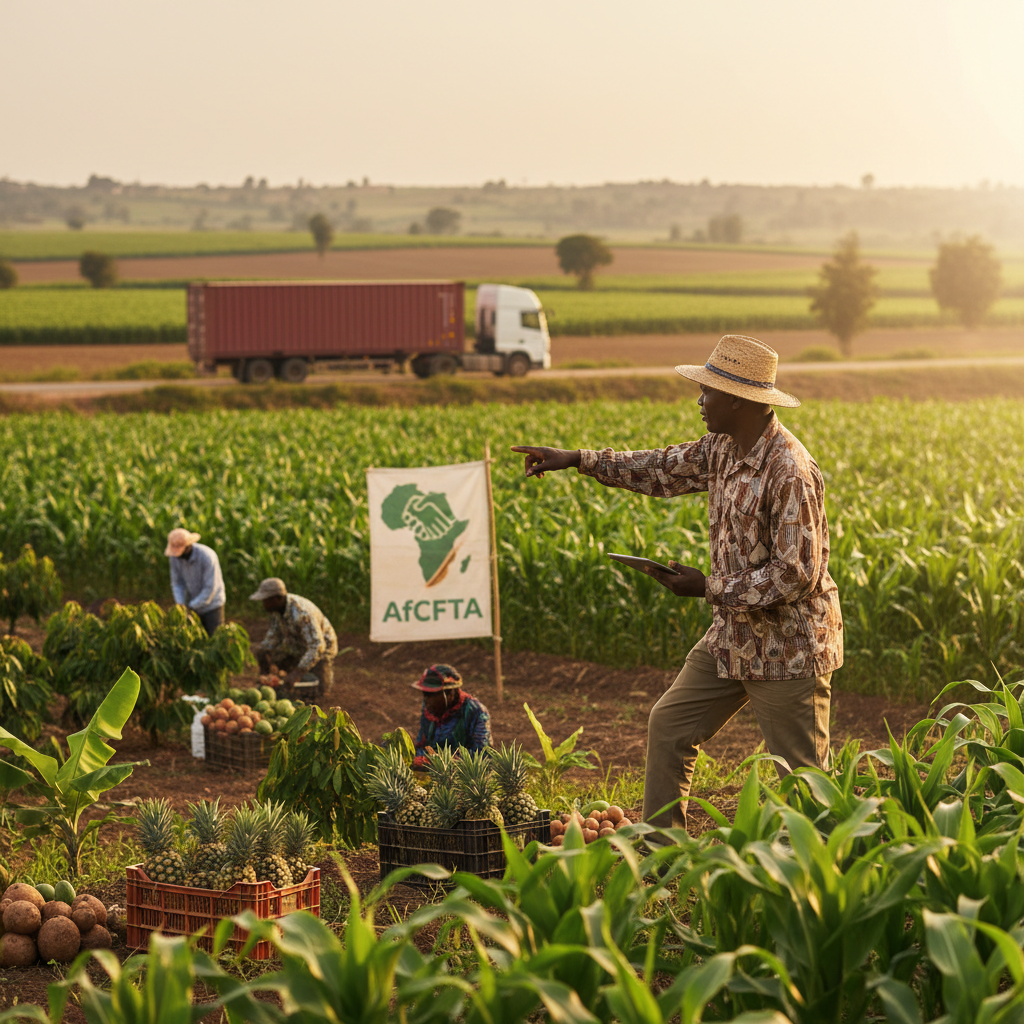
Leveraging AfCFTA for Agribusiness Growth
Practical strategies for SMEs to take advantage of the African Continental Free Trade Area for cross-border success.
On 1 January 2021, the African Continental Free Trade Area (AfCFTA) began trading. The moment had been decades in the making: 55 African Union member states had negotiated what is, by country count, the largest free trade area ever created. A combined GDP of roughly USD 3.4 trillion. A market of more than 1.4 billion people. In theory, the potential for Ghana's agricultural sector is transformative.
In practice, the reaction from many Ghanaian agribusinesses has been cautious, sometimes cynical. One farmer cooperative leader we spoke to put it plainly: 'I hear about AfCFTA at conferences, but I still don't know what it means for me when I'm trying to sell my tomatoes.' The gap between political rhetoric and business reality is exactly what this article is meant to close.
What AfCFTA Actually Changes for Agricultural Exporters
The agreement's central commitment is for member states to eliminate tariffs on 90% of traded goods, with sensitive products getting longer phase-out periods. For agricultural goods, this matters. Intra-African trade has historically been burdened by tariffs, non-tariff barriers, and bureaucratic friction that made it cheaper for many African countries to import food from Europe than from their neighbours. AfCFTA is designed to change that calculation.
A Ghanaian exporter of fresh vegetables, processed cassava products, or dried fruits will progressively face lower or zero tariffs in participating markets that previously charged import duties. This improves price competitiveness in a direct and measurable way. But for most small and medium agribusinesses, tariff reduction is not the most important change AfCFTA brings.
Why Non-Tariff Barriers Matter More
Ask any experienced African agricultural trader what their biggest obstacles are, and tariffs rarely come first. The real friction comes from non-tariff barriers: inconsistent quality standards between countries, cumbersome and duplicated customs documentation, unreliable transport infrastructure, inadequate cold chain capacity, and unpredictable phytosanitary requirements. AfCFTA's work programme specifically targets the harmonisation of standards across all of these areas.
For a Ghanaian exporter, this means that in the coming years, businesses that can demonstrate compliance with agreed continental food safety standards should face a considerably smoother regulatory path into markets like Senegal, Nigeria, Côte d'Ivoire, or Kenya than has historically been possible. The businesses investing now in quality management systems and documentation capabilities are building exactly the foundation AfCFTA will reward.
AfCFTA is not a magic switch. It is a structural shift that rewards businesses already operating at a high standard. If your quality control, documentation, and supply reliability are solid, it opens doors. If they are not, it exposes weaknesses.
Seyram Israel Sah, Market Strategist, PEA Agro Consult
Five Practical Strategies for Ghanaian Agribusinesses
Do proper market research before entering new territories
Not all African markets offer equal opportunities for every product. Nigeria's 200 million consumers make it an obvious target, but the market is complex, highly competitive on price, and logistically demanding. Smaller, wealthier markets such as Gabon, Equatorial Guinea, or Botswana can offer better margins for premium products. The ECOWAS bloc remains Ghana's most natural starting point given the existing regional frameworks. Whatever the target, a proper research exercise looking at import volumes, domestic production gaps, competitor profiles, and logistics routes should come before any commitment to market entry.
Build your documentation and traceability now, not later
Regardless of the destination market, buyers are increasingly demanding transparency about where food comes from and how it was produced. A traceability system does not need to be expensive. Simple batch coding, supplier registers, and harvest records create an auditable chain of custody that satisfies most commercial buyers. Farmers and processors who can tell a clear, documented story about their product will have a genuine competitive edge as AfCFTA's harmonised standards come into full effect.
Join or build a producer group to create real scale
Individual smallholders rarely have the consistent volume to supply African commercial buyers reliably. A Rwandan importer looking for 20 tonnes of dried mango per month cannot manage relationships with 200 individual farmers. They need one reliable aggregator. Producer cooperatives and outgrower scheme operators are the organisational model that AfCFTA genuinely favours. By pooling production, farmers can meet the volume, quality consistency, and supply reliability that commercial buyers require.
Use ECOWAS as a training ground before going further
Ghana is already part of the ECOWAS free trade area, which provides a practical testing ground for cross-border agricultural trade within West Africa. Building export experience, logistics networks, and buyer relationships within ECOWAS before pushing into East or Southern Africa is a lower-risk path to developing continental export capability. What you learn selling into Burkina Faso or Togo today will directly inform your strategy for Kenya or Zambia tomorrow.
Look at processed and semi-processed products
Raw commodity exports carry thin margins and significant price volatility. AfCFTA creates real opportunity for processed and semi-processed agricultural products: dried fruits, fruit concentrates, edible oils, cassava flour, packaged spices. These carry better margins, longer shelf lives, and simpler logistics than fresh produce. A container of dried mango slices is far more forgiving than a refrigerated truck of fresh mangoes that needs to cross two borders.
Digital tools worth knowing about
AfCFTA has launched the African Trade Observatory, an online platform providing trade statistics, tariff schedules, and market intelligence for member states. The Pan-African Payment and Settlement System (PAPSS) is also being rolled out to enable cross-border payments in local currencies, reducing the dependence on US dollars and the transaction costs that have historically slowed intra-African trade. Businesses that get familiar with these tools now will have an operational advantage as volumes grow.
Where Ghana Has a Genuine Edge
Ghana is not starting from scratch. The port of Tema provides strong logistics access to Atlantic shipping routes. English as the business language eases dealings with East African markets. Ghana's political stability and reputation for business-friendliness matters to risk-averse buyers assessing African suppliers. And the country already has established buyer relationships in Europe and the Middle East, relationships that can be used to facilitate introductions to African subsidiaries and regional offices of the same companies.
Ghana's core agricultural products, including cocoa, tropical fruits, vegetables, cashews, shea, and a growing aquaculture sector, align well with documented import needs across the continent. Many West and Central African nations that are net food importers are bringing in products that Ghana produces. As AfCFTA's tariff structure matures, sourcing from Ghana will progressively become more attractive than sourcing from outside the continent.
A Practical Starting Point
- Commission a formal market research exercise on at least two target AfCFTA markets for your main product. Identify import volumes, price benchmarks, key buyers, and regulatory requirements before committing resources.
- Audit your current documentation and quality management practices against international standards. Gaps identified now cost far less to fix than gaps identified at the point of a failed export.
- Register with the Ghana Export Promotion Authority (GEPA) if you have not already done so. This opens access to export facilitation programmes and buyer introduction initiatives.
- Engage with your nearest ECOWAS trade facilitation desk to understand the bilateral frameworks that can be activated before AfCFTA's full implementation catches up.
- Work with a specialist to navigate the specific regulatory requirements of your target market. Requirements vary significantly between member states, and the wrong assumption can be expensive.
AfCFTA strategy is not something to figure out alone
PEA Agro Consult has team members on the ground in Ghana and market intelligence from Qatar and the broader Middle East. We conduct product and market research, connect clients with verified buyers, and provide practical support through every stage of developing a new export relationship. If AfCFTA is on your agenda, let's work out what it can realistically mean for your business.
Ready to put this into practice?
PEA Agro Consult's team of experts is ready to guide your agribusiness — from certification and greenhouse setup to market entry and commodity aggregation. Let's build something remarkable together.